

Climate & Energy · East Africa · El Niño
El Niño floods could force up to 3 million people from their homes in East Africa by year-end, UNHCR warns
Somalia and Kenya face the biggest risk as the October to December rains build under a very strong El Niño. The warning lands a day before COP31 opens in Antalya.
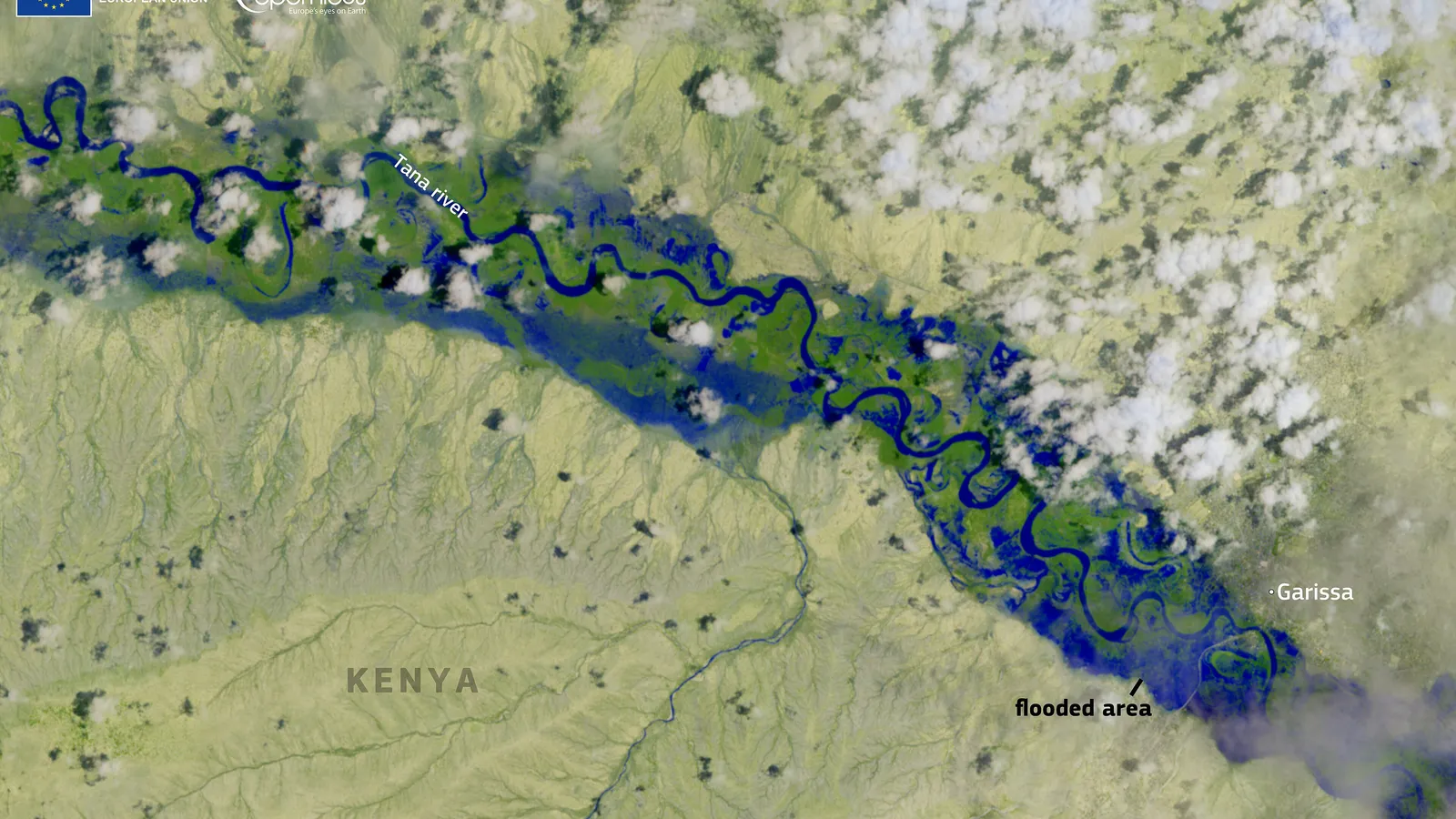

NAIROBI — Floods driven by a very strong El Niño could push as many as three million people out of their homes across Somalia, Kenya, South Sudan and Uganda before the end of the year, the UN refugee agency UNHCR has warned, as the region moves deeper into its October to December rains.
The range is wide because the rains are still unfolding. The scenarios behind the figure run from about 773,000 people displaced if the season stays on the lighter side, to about 1.6 million in a central case and 3 million in a severe one, with between 3.4 and 9.3 million people affected. For comparison, the same season in 2023 displaced more than 1.95 million people across the four countries.
Where the risk sits
Somalia carries the largest share in every scenario, rising to about 1.8 million people in the severe case, because so many families live along the Juba and Shabelle rivers. Kenya’s risk is spread more widely, across the Tana basin, the eastern lowlands, the cities and the coast, and climbs to about 1.03 million in the severe case. Bura, on the Tana River, is one of the clearest hotspots. Uganda faces a mix of river, lakeshore, urban and landslide hazards. South Sudan’s smaller estimate reflects the season covered rather than low risk, since much of its flooding along the White Nile and in the Sudd is chronic and peaks earlier in the year.
Heavy rain in this season can burst riverbanks, cut roads and wash out farmland at the point when many households are still recovering from earlier shocks. Some families displaced in 2023 had to flee more than once.
A climate summit backdrop
The East Africa figure is part of a wider UNHCR report released ahead of COP31, which opens in Antalya, Türkiye, on Monday. It says nearly 90 million forcibly displaced people, three in four worldwide, live in countries with high to extreme exposure to floods, drought and heat, and that fragile and conflict-hit states receive only around 10% of global climate finance. Weather-related disasters have triggered more than 255 million internal displacements over the past decade, roughly 70,000 a day.
AB24 will follow flood warnings from Kenyan and Somali authorities through the season. Related: displacement at Moyale and Somalia’s security transition.
Sources: UNHCR, 6 Nov 2026; Danish Refugee Council, Mobility Outlook in East Africa, Aug 2026; The Eastleigh Voice, Nov 2026.
— AB24 · Nairobi