

Business · South Africa · Infrastructure
AfDB approves a $503.75 million loan for South Africa’s infrastructure reforms
The bank’s board backed reforms meant to open electricity, freight and water to more competition and private investment. The statement says the loan is approved. It does not say the money has been paid out.

JOHANNESBURG. The African Development Bank’s board has approved a $503.75 million loan to South Africa for the Infrastructure Governance Reform Program. The bank says the loan will support reforms opening the electricity, freight transport and water sectors to competition and private investment. It announced the approval on 11 November.
The bank describes the new program as the third reform operation since 2023. It says budget support to South Africa since then now totals over $1.2 billion. Of that, $300 million went to the 2023 Energy Governance and Climate Resilience Support Program, which the bank says supported electricity-sector restructuring, Eskom’s financial sustainability, the creation of the National Transmission Company South Africa, and greater private participation in renewable energy.
A 2025 operation, the Infrastructure Governance and Green Growth Program, was $474.5 million. The bank says that loan strengthened electricity-market reforms, renewable-energy integration and distribution efficiency, introduced transport-sector reforms, and included social-protection measures tied to the energy transition. It says the work sits in a development-partner framework led by the National Treasury.
Kennedy Mbekeani, the bank’s director general for the Southern Africa region, said the new operation matched what the bank calls its Four Cardinal Points. “This operation sits squarely on the Bank’s Four Cardinal Points. It crowds private capital into transmission and rolling stock, strengthens the institutions that let South Africa finance infrastructure on its own terms, targets the jobs a young population needs, and builds infrastructure that can stand climate pressure.”
Electricity, rail and the port
The bank says the central reform is meant to change Eskom from the sole buyer and seller of electricity. It says the regulator, NERSA, has issued a market-operator licence to the operator housed inside the National Transmission Company, Eskom’s ring-fenced transmission subsidiary. It says NERSA has also approved grid-capacity allocation rules, which set out who may connect and in what order, and created a market surveillance and competition unit. The target, the bank says, is for the wholesale market to account for 10 percent of total electricity transactions by December 2027.
On freight, the bank says the Transnet Rail Infrastructure Manager allocates train paths across 21,232 km of track under a gazetted network statement. It says the Department of Transport has issued slot licences to private train operators, and that at least 11 slots across six corridors were awarded in August 2025, a first for South African freight rail. The regulator is expected to approve at least six licensed new private rail and port operators by December 2027, the bank says, with rail freight throughput rising from 161 million tonnes a year to 180 million tonnes.
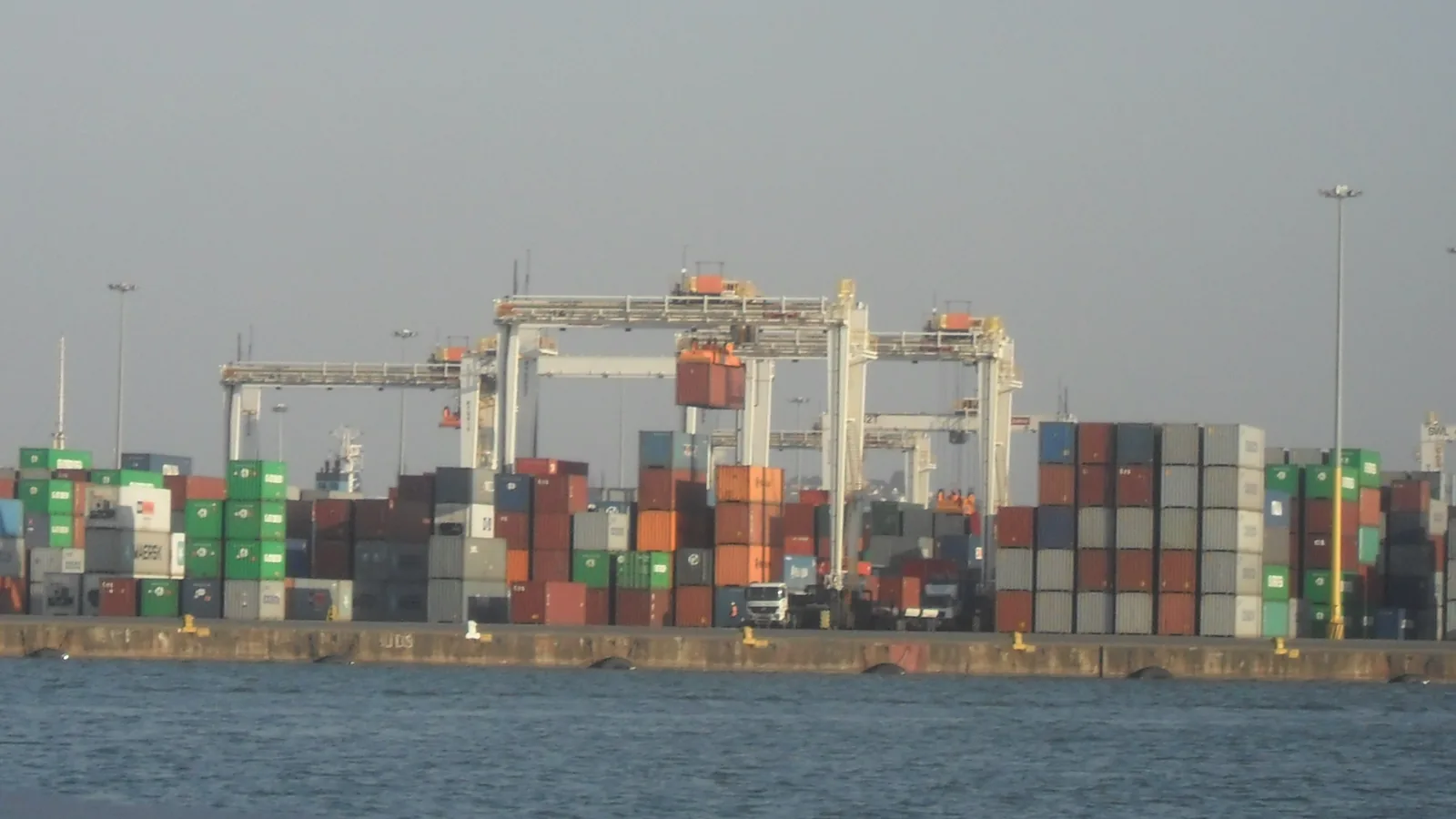
The bank also points to South Africa’s first port-terminal concession, signed in December 2025: a 25-year deal with International Container Terminal Services for Durban Container Terminal Pier 2. It says that terminal handles 46 percent of the country’s containers, and that the concession should lift capacity from 2.0 million TEUs to 2.8 million by 2028. Rolling-stock investment is targeted to triple to R6 billion a year, which the bank describes as roughly $360 million. The dollar figure is the bank’s own approximation. This desk has not applied a separate exchange rate.
The bank’s summary of the operation also lists licensing for municipal water suppliers. The statement closes by saying the expected gains are shorter truck queues at Durban port, a more reliable water supply and competitively priced electricity. It says the bank remains committed to helping South Africa carry out the energy, transport and water reforms and to measurable service delivery. It does not say the new $503.75 million has been disbursed.
The loan is separate from the five-year memorandum the same bank signed with France’s AFD in Paris, also announced on 11 November. See AfDB and France’s AFD sign a five-year pact to scale joint African investment.
Sources: African Development Bank press release, 11 Nov 2026.
AB24 · Johannesburg