

Analysis · Business · South Africa
R9 billion in film work is waiting while Parliament argues over who may speak for the industry
A committee meant to hold the DTIC to account never heard the Coalition's report on 24 November. The Coalition says foreign producers have already moved projects over the rebate.

Analysis | By Thabo Molefe, Johannesburg
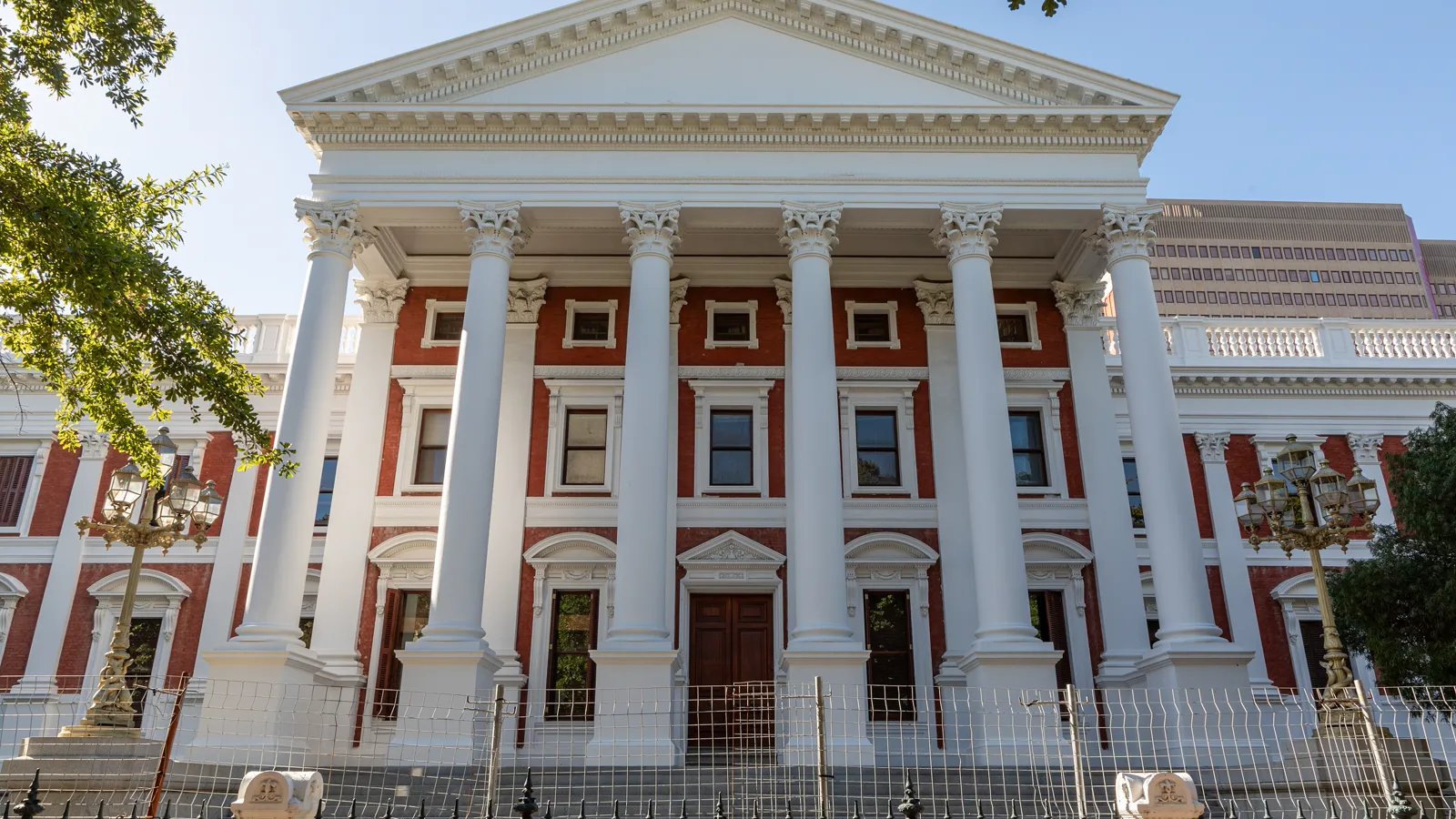
On Tuesday 24 November, Parliament's Portfolio Committee on Trade, Industry and Competition met to hear why South Africa's film rebate is still not working. It spent the session on a different question: who may speak for the industry.
By the end, MPs were talking over each other. The Save SA Film and TV Jobs Coalition never delivered its report. The Department of Trade, Industry and Competition (DTIC) was never pressed on its own. Both were told to return with one document next quarter, which puts the next hearing in 2027.
Behind that scene sit lost projects, lost jobs and foreign producers still waiting for reassurance.
What the numbers say
The most reliable figures are the DTIC's own. In a February presentation to this committee, the department said it held 80 applications lodged between May 2024 and December 2025. They carry projected production spending of R9 billion, a projected incentive of R1 billion and about 5,000 jobs.
Foreign productions make up 43 of those applications and R8.5 billion of the spend, with 3,700 jobs and a projected incentive of R694 million. That is roughly R1 of rebate for every R12 of foreign-funded spending, by AB24's arithmetic. The same slide records zero approvals in 2024/25 and 2025/26, which the department blamed on its contingent liability. Adjudication stalled for more than two years.
The Coalition put a human face on the cost in August. One production services company, it told MPs, lost four projects worth R822 million in local spending and about 1,850 jobs this financial year. The rebate needed to keep them was roughly R75 million. The Coalition says the producers cited rebate uncertainty as the reason they left.
The DTIC deserves credit. It says adjudication has resumed, and the legacy liability has fallen from about R2 billion in 2021 to R255 million by June. Variety reported in October that about R1.5 billion has been set aside to fund the rebate through 2029.
But 17 approvals sit against a pipeline of 80. A rebate only works if investors believe in it.
Business Day described one casualty in September. A Quizzical Pictures co-production, backed by pre-buy commitments from the BBC, Stan and Amazon, would have brought more than R100 million in foreign investment and about 300 jobs. It collapsed while waiting for the rebate committee to decide, the company's managing director said.
Anatomy of the meeting
The Coalition, an alliance of 18 industry bodies that says it represents 95% of the sector, signed a heads of agreement with the DTIC on 10 August. CallSheet reported it was due to say the commitments had not been delivered and its letters to the Minister had gone unanswered.
It never got the chance. The DTIC's Justice Ngwenya told the committee the other 5% also had to be engaged. That 5% is the Independent Black Filmmakers Collective (IBFC), which did not join the Coalition.
EFF MP Muzi Khoza said he wanted to confront sections of what he called a "white-dominated film industry" whose conduct, he said, perpetuated "historic exclusion and gatekeeping". The Coalition's Delon Bakker denied it was exclusionary.
Simon Makwela, co-chairperson of the South African Screen Federation, said he was a black filmmaker and that "the industry does not prejudice based on race." According to CallSheet, chairperson Mzwandile Masina asked whether Makwela had ever applied for the rebate. Told he had not, Masina replied: "We see now you are speaking about something you don't understand." He added: "We don't want tokens talking in the meeting." News24 reported that the chair called Makwela a "token". The South African Guild of Editors condemned his treatment.
DA MP Toby Chance said the agenda had been "hijacked" and refused Masina's request to withdraw the word. His colleague Katherine Christie said MPs should "be more mature" and hear the presentation. GroundUp reports that other MPs asked for her removal. News24 reported she was removed from the online meeting.
Parliament's statement says the committee had received "numerous complaints" about exclusion. IBFC co-chair Ramadan Suleman told CallSheet his group backs a single report, and that talks with the Coalition broke down over who would represent it.
Those concerns deserve a hearing. But a committee can pursue inclusion and still hear the group that, by Parliament's own admission, represents 95% of the sector. This one heard neither report. The DTIC is spared a public account for another quarter, and the Coalition's evidence stays unpublished.
The framing problem
GroundUp, which has covered the crisis closely, ran its account of the meeting on 25 November under the headline "Film industry briefing derailed as MPs fight over race", with the sub-headline "Meeting agenda was 'hijacked,' DA MP claims".
The report is accurate on what was said, and notes that no new applications had been processed since 2024. But it carries none of the R9 billion pipeline, the lost jobs or the Makwela exchange that CallSheet and News24 reported. A reader leaves with a row.
That is AB24's view, and it is an argument about emphasis, not accuracy. A headline that casts a rebate failure as a fight over race tells investors the main risk is South African politics. It does not ask whether the DTIC kept its promises.
That matters because the rebate's value lies in predictability. Producers raise the finance, carry the risk and spend first. The state reimburses afterwards. Parliament's own statement recalls that incentives approved as far back as 2021 were revoked and later reinstated by the courts.
The verdict
South Africa still has crews, studios and a reputation. What it is losing is trust. If government wants foreign work back, its committees must hold the DTIC to its August commitments, and not let a dispute over who sits at the table become a reason to avoid the evidence.
Suleman says the industry should negotiate directly with the DTIC and not wait for Parliament. He wants to announce at the Berlinale in February that the incentive is back on track. That is a fair test. Until then, every quarter of delay is a quarter in which a producer, somewhere, picks another country.
SourcesShow
- Parliament of South Africa, "Media Statement: Trade and Industry Committee Calls for a Single, Inclusive Industry Voice in Film and Television Sector", 24 November 2026. https://www.parliament.gov.za/press-releases/media-statement-trade-and-industry-committee-calls-single-inclusive-industry-voice-film-and-television-sector
- GroundUp, "Film industry briefing derailed as MPs fight over race", Liezl Human, 25 November 2026. https://groundup.org.za/article/film-industry-briefing-derailed-as-mps-fight-over-race/
- CallSheet, "Parliamentary committee refuses to hear Save SA Film and TV Jobs Coalition's report over Film and Television Production Incentive", 25 November 2026. https://thecallsheet.co.za/2026/11/25/parliamentary-committee-refuses-to-hear-save-sa-film-and-tv-jobs-coalitions-report-over-film-and-television-production-incentive/
- News24, "DA MP kicked out of parliamentary meeting, chair calls film leader a 'token'", William Brederode, 24 November 2026. https://www.news24.com/business/economy/da-mp-kicked-out-of-parliamentary-meeting-amid-accusations-of-tokenism-racism-20261124-1059
- DTIC, "Engagement with the Film and TV industry: the dtic, IDC and NEF", presentation to the Portfolio Committee, 17 February 2026. https://www.thedtic.gov.za/wp-content/uploads/Film-Incentives.pdf
- GroundUp, "Government paralysis costs film industry thousands of jobs and millions in revenue", Liezl Human, 13 August 2026. https://groundup.org.za/article/government-paralysis-has-cost-film-industry-thousands-of-jobs-and-millions-in-revenue/
- Portfolio Committee on Trade, Industry and Competition, meeting of 11 August 2026 (Coalition presentation). https://www.youtube.com/watch?v=IOFsRBkgwPA
- Business Day, "South Africa's film and TV industry could have had its own Korea moment", Janine Walker, 11 September 2026. https://www.businessday.co.za/lifestyle/arts-and-entertainment/2026-09-11-south-africas-film-and-tv-industry-could-have-had-its-own-korea-moment/
- Variety, "How South Africa Rescued Its Rebate and Pulled the Industry Back From the Brink", Christopher Vourlias, 12 October 2026. https://variety.com/2026/film/global/south-africa-rescue-rebate-1236908689/
AB24 · Johannesburg