

Business · Chips · Companies
Nvidia says Jensen Huang has resigned, with Colette Kress named interim chief executive
The board's Thursday statement gives no reason. Semafor reported a US antitrust probe. A shareholder suit alleges investors were misled about an affair Huang has acknowledged. This desk found no new African chip deal tied to the resignation.
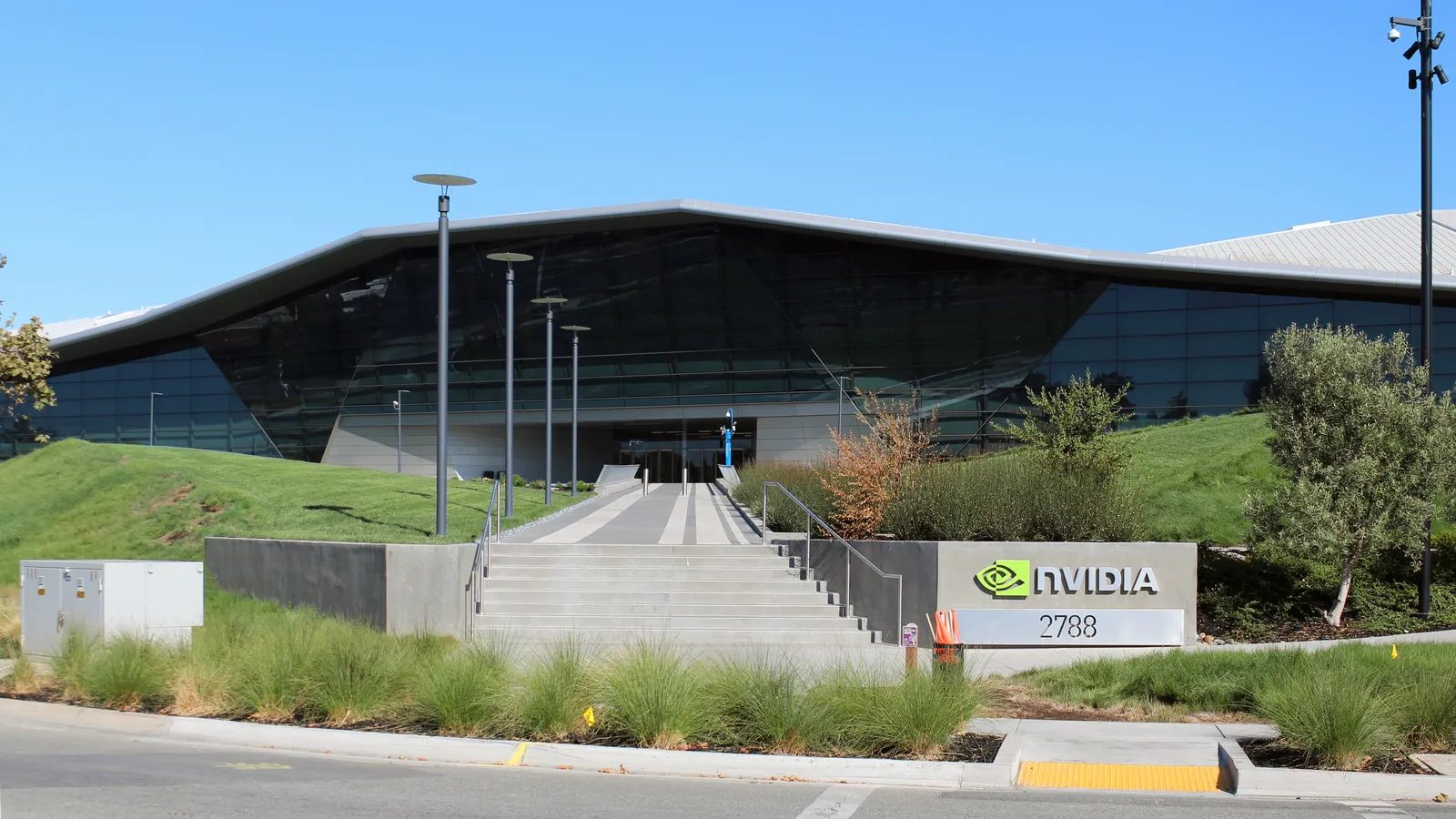

JOHANNESBURG. Nvidia said on Thursday that Jensen Huang has resigned as president, chief executive and a member of the board, effective immediately. The board's statement does not say why.
Colette Kress, executive vice president and chief financial officer since September 2013, will be interim chief executive and will keep the finance job until a permanent successor is named. The board said it will consider internal and external candidates. It appointed Harvey C. Jones, a former chief executive and executive chairman of Synopsys, as the board's first chair.
"Colette has helped lead NVIDIA through a period of extraordinary growth and has a deep understanding of our business, customers, operations and financial position," Jones said. "She is supported by an experienced leadership team that has been instrumental in executing NVIDIA's strategy and advancing its technology roadmap. The Board has full confidence in Colette and the leadership team, and we expect the company's operations, customer commitments and product roadmap to continue without interruption."
Kress said: "NVIDIA's strength has always come from its people, and together with our leadership team, I am committed to building on the extraordinary foundation Jensen created over the last 33 years. We will continue advancing the work that has made NVIDIA a leader in accelerated computing and AI, and execute on the opportunities ahead. Our focus remains on serving our customers, partners, developers and shareholders."
The statement thanks Huang and calls his contributions profound and immeasurable. It does not include a comment from him. Nvidia said it will still report third-quarter results for fiscal 2027 on Tuesday 17 November, at about 1:20 p.m. Pacific time, which is 23:20 SAST, with the earnings call at 2 p.m. Pacific time, 00:00 SAST on Wednesday 18 November.
The resignation comes after a week of allegations that Huang has answered only in part. NBC News and the Guardian have described the episode as a scandal. Nvidia's statement does not use that word, and it does not mention the allegations.
What Huang has acknowledged is an affair. The Guardian reported that on Sunday he said he had been "unfaithful" to his wife, without naming the person. The same paper reported an open letter on Nvidia's website in which he said: "I support the investigation and will cooperate fully. I love our country and our company. I am committed to protecting Nvidia and supporting America's national security." The Guardian also reported that Nvidia said on Sunday it was investigating reports that Huang was the "target of a foreign intelligence effort."
The allegation beyond the affair is espionage. The Guardian said the New York Times had reported that US authorities concluded Alice Huang, a former executive at Singapore-based Megaspeed and no relation, was a Chinese intelligence asset. NBC News said a person with knowledge of the matter told it that US intelligence agencies had determined she had an affair with the Nvidia chief executive and was a Chinese intelligence operative. NBC also quoted a former national security official who said her precise role was unclear, and that she may have been asked to share information rather than having been a career officer of China's Ministry of State Security.
China's foreign ministry, as NBC News quoted it on Thursday, said "the U.S. side should stop fabricating so-called espionage narratives as a pretext for implementing technological blockades."
Singapore's Ministry of Home Affairs, in NBC's account of a government statement, said Alice Huang had been barred from re-entering the country and warned after police found she had knowingly given inaccurate information that played down her role at the company. The ministry said she was not investigated for espionage. Investigators concluded in February there was "insufficient evidence to establish that Huang had committed any offences," while inquiries into Megaspeed and six other people, related to shipments of servers through Singapore, were continuing. The ministry said: "Despite these repeated requests, Singapore has to date received limited information or assistance in respect of the company."
Megaspeed's chairman and chief executive, Tan Yong Pong, also known as James Tan, said on Thursday that the company takes its duty to comply with US export-control laws "extremely seriously." NBC News quoted the statement: Megaspeed has "cooperated with inspections by the U.S. Department of Commerce's Bureau of Industry and Security (BIS) and stands ready to cooperate fully with any other relevant U.S. government authority," and it has hired a US law firm to count its graphics processors and check its export-control practices. The statement did not address the allegations about Alice Huang. The Guardian reported that Megaspeed said last year it had acted "fully in compliance with all applicable laws, including US export control regulations."
A shareholder lawsuit in federal court in California alleges that Nvidia and Huang misled investors. The Guardian said the complaint, brought by retail investor Mark Kistenmacher and seeking unspecified damages for a proposed class, claims the company did not disclose national-security concerns, and that a comment Nvidia gave the New York Times was "materially false and misleading" because of the affair. In that comment, the Guardian reported, Nvidia called the interaction with Alice Huang "not unusual or unexpected" and said "meetings with customers are part of a CEO's job; Jensen talks with thousands of customer executives every year." The Guardian said Nvidia and Megaspeed had not immediately commented on the suit. It reported that the shares closed down 4.3% on Monday, which the paper said cut market value by about $190 billion. This desk is not adding a later price.
President Donald Trump, at a White House briefing the Guardian reported, said the FBI was looking at the matter "in terms of something else" and that he thought Huang would "be in good shape." Trump said Huang "had absolutely no idea that the person in question was a spy." That is Trump's account of the conversation, not a finding.
The Guardian also reported a 30 October interview in which Huang said of Megaspeed, "we've studied all their deployments of our GPUs and counted every one," and "I think the US government also has as well."
Semafor reported on Thursday, citing two administration officials, that the Justice Department has an antitrust probe focused on Nvidia, and separate inquiries into Megaspeed and Supermicro focused on Alice Huang. Semafor said there was no indication the department would seek to charge Nvidia or Huang criminally at this time. It said Nvidia and the department did not comment. A Supermicro spokesperson told Semafor: "Megaspeed is not, and has never been, a Supermicro customer," and that Supermicro "has fully cooperated with US and Taiwanese officials, while also voluntarily providing information and engaging with all requests from Singapore authorities to date." The spokesperson said the company "maintains a robust compliance program and continues to work closely with authorities and industry partners to combat diversion and help protect American innovation."
The Verge reported that the New York Times, citing five people who worked at Nvidia, identified a second relationship, with Kimberly Powell, Nvidia's vice president of healthcare, and that the board met on Wednesday night. Nvidia's resignation statement does not mention Powell. It says Huang resigned. It does not say the board removed him.
This desk did not find, in Nvidia's statement or in the reports used here, a new African chip contract, export licence or data-centre deal tied to the resignation or to the inquiries. It is not inferring an effect on African buyers from the US export-control allegations.
AB24's reading from Johannesburg: the fact the company has stated is the resignation, effective immediately, with Kress as interim chief executive and results still scheduled for Tuesday. Around it sit an acknowledged affair, espionage and export-control allegations that are disputed, a shareholder suit, and reported US investigations that Nvidia has not answered in public.
Sources: Nvidia newsroom, "NVIDIA Announces CEO Transition," 12 November 2026; The Guardian, 10 November 2026; NBC News, 12 November 2026; Semafor, 12 November 2026; The Verge, 12 November 2026. The $190 billion figure is the Guardian's account of Monday's move. Nvidia's statement does not give a dollar figure.
AB24 · Johannesburg